

1–2% Units and CLV: Bankroll Management for Sports Bettors
Bankroll management is a survival-first system: size your bets as a small percent of ring-fenced betting funds, set firm stop rules, and keep records so you last long enough for skill to actually matter. Start with money set aside strictly for betting, never rent or bill money. Cap each bet at 1% to 2% of that pool, set a stop-loss for the day and the month, and write down every wager. Everything else in this guide builds on those four moves.
TL;DR:
- Betting with 1% to 2% of your bankroll per bet helps avoid large losses during inevitable losing streaks, especially when starting out.
- Maintaining records of every wager, including odds and outcomes, is essential for measuring process quality through metrics like CLV.
- Scaling your bet size based on your bankroll’s size, and not chasing losses, reduces the risk of ruin and keeps long-term growth viable.
- Avoid red flags such as borrowing money or hiding bets, and pause betting immediately if you experience stress or repeated emergencies.
- Using tools like ParlayGeeks can improve line comparison, record-keeping, and discipline to support sustainable betting habits.
Table of Contents
- What Quick Rules Should You Follow Starting Today?
- How Do You Size Your Bankroll and Choose a Unit?
- Flat Staking, Percentage Staking, or Fractional Kelly: Which Fits You?
- How Do You Control Variance and Avoid Risk of Ruin?
- What Should You Track: CLV, ROI, and Sample Size
- What Mistakes Wreck a Bankroll (and How Do You Recover)?
- How Does ParlayGeeks Support These Habits?
- A Short Word on Discipline Over Confidence
- Where ParlayGeeks Fits Into Your Plan
- Trusted Resources and Support Contacts
- Sources
- FAQ
What Quick Rules Should You Follow Starting Today?
You do not need a spreadsheet degree to start managing a betting bankroll correctly. You need eight rules, applied consistently, before you place another bet.
- Separate the funds. Move your betting money into its own account or app balance, untouched by bills or savings.
- Set a monthly cap. Decide the maximum you can lose in a month without it affecting your life, and treat that number as fixed.
- Pick a unit size. Use 1% to 2% of your total bankroll per bet as a baseline.
- Set a session cap. Cap how much you can lose in a single sitting, typically a small fraction of your bankroll.
- Set a stop-loss. Walk away for the day once you hit that session cap, no exceptions.
- Set a stop-win. Lock in gains at a target (many bettors use double their session cap) instead of pushing your luck.
- Set a time limit. Cap your betting session at a fixed number of hours.
- Keep records. Log every bet: stake, odds, and outcome.
Here’s what that looks like with real numbers. Newer bettors should lean toward the conservative end, 1% units and tighter stop-losses, until they have a track record. Bettors with a few hundred logged bets and a positive trend can push toward 2% with more confidence.
How Do You Size Your Bankroll and Choose a Unit?
Your bankroll is money set aside strictly for betting, and it never touches rent, groceries, savings, or debt payments. Mixing the two is the single fastest way to turn a hobby into a financial problem, and it’s the first thing every serious bankroll strategy corrects.
Start by setting a monthly entertainment cap, the total you are comfortable losing in a bad month with zero effect on your life. That number becomes your working bankroll. From there, convert it into units:
- At 1% units, a $1,000 bankroll gives you $10 per bet, roughly 100 units of runway.
- At 2% units, that same $1,000 gives you $20 per bet, about 50 units of runway.
- At 5% units, you’re down to just 20 units, which most guides consider too aggressive for regular play.
Pro Tip: If your calculated unit size falls below a sportsbook’s minimum bet, either raise your monthly cap slightly or shift toward markets and books with lower minimums instead of inflating your unit size to compensate.
If your bankroll is small, say under $200, don’t abandon the percentage system. Shrink your session cap instead, stick to single bets rather than parlays that eat multiple units at once, and choose markets where the minimum stake doesn’t force you above your 1% to 2% target.
Flat Staking, Percentage Staking, or Fractional Kelly: Which Fits You?
Most bettors should start with flat staking. It means betting the same fixed unit on every wager regardless of confidence level, and it’s why flat staking at 1% to 2% is the standard baseline for anyone without a large, verified sample of results. It’s simple, it’s forgiving of mistakes, and it makes your record-keeping easy to audit.
Percentage staking works differently: your unit recalculates as a percent of your current bankroll rather than your starting bankroll. That means your bets shrink automatically during a downswing and grow during an upswing, which softens the risk of ruin without you having to intervene manually.
Then there’s the Kelly Criterion, a formula that calculates the theoretically optimal bet size based on your edge and the odds offered. It maximizes long-term growth on paper, but almost nobody uses it at full strength. The reason is estimation error: if your edge calculation is even slightly off, full Kelly can swing your bankroll violently. That’s why fractional Kelly at 25% to 50% of the full calculation is the version professionals actually recommend.
Here’s how to decide:
- New to tracking your results? Use flat staking until you have a real sample size.
- Comfortable with spreadsheets and confident in your edge estimates? Try percentage staking.
- Running a proven, positive-CLV process with real data behind it? Test fractional Kelly at 25% to start, and only scale the fraction up if your edge estimates keep proving accurate.
How Do You Control Variance and Avoid Risk of Ruin?
Risk of ruin is the mathematical probability that a losing streak wipes out your bankroll before your long-term edge, if you have one, ever gets a chance to show up.

Losing runs happen to everyone, including bettors with a genuine long-term edge. A string of ten losses in a row is well within normal variance for a bettor hitting 55% on standard point-spread pricing, and reacting to it by doubling your unit size is how a bad week becomes a wiped-out bankroll.
Scaling rules keep that reaction in check:
- Scale down after a 20% to 25% drawdown from your peak bankroll. Cut your unit size proportionally and rebuild slowly.
- Scale up only after sustained growth, generally 25% or more over a real sample, not a hot weekend.
- Set a session stop-loss and stop-win, and a matching monthly version of both.
- Set a hard time limit per session so fatigue doesn’t do the deciding for you.
- Never chase a loss with a bigger bet. The math of risk of ruin gets worse every time you do it, and the urge to chase is exactly the behavioral pattern that turns a hobby into a problem.
What Should You Track: CLV, ROI, and Sample Size
Every bet you place should generate a row in a log, and that row needs specific fields to be useful. At minimum: date, market, stake, odds taken, implied probability, your estimated edge, the closing line, and the final result.
Closing-line value, or CLV, measures the gap between the odds you took and the odds at the market’s close, right before the event starts. CLV is widely treated as the earliest reliable signal of process quality, because it tells you whether you’re consistently beating the market’s own final assessment, independent of whether any single bet actually won.
| Metric | What it tells you | When it becomes reliable |
|---|---|---|
| CLV | Whether your process beats the closing market | Meaningful after a few dozen tracked bets |
| Win rate | Raw percentage of bets won | Noisy at any sample under a few hundred bets |
| ROI | Return relative to money staked | Needs roughly 200+ tracked bets to mean much |
Win rate alone is misleading in small samples, and even ROI needs volume before you can trust it. Watch for measurement errors too, like logging odds after the line moved instead of at bet placement, since a sloppy ledger will quietly poison every metric built on top of it.
What Mistakes Wreck a Bankroll (and How Do You Recover)?
The same handful of mistakes show up again and again: chasing losses with bigger bets, dipping into rent or bill money to keep playing, increasing stakes after a short hot streak, and ignoring a sportsbook’s minimum bet in a way that forces oversized units.
Watch for red flags that go beyond strategy: repeated emergency deposits, hiding your betting activity from people close to you, borrowing money to bet, or feeling genuine stress about your balance. Those are signals to stop, not signals to bet your way out.
Pro Tip: If you notice any of those red flags in yourself, pause betting entirely for at least a week before touching your account again. A short break breaks the emotional momentum that leads to chasing.
Recovery is a short list: pause, audit your records to see exactly where things went wrong, cut your unit size, reset your caps to something more conservative, and reach out to support resources if the pattern keeps repeating.

How Does ParlayGeeks Support These Habits?
A sports betting platform with tools like odds comparison, a parlay calculator, shareable betslips, and educational resources can support managing your bets, keeping accurate records, and learning about staking and bankroll discipline.
A Short Word on Discipline Over Confidence
Betting careers rarely end because someone lacked a good pick. They end because a losing run met an oversized bet and a bankroll with no floor. Track everything, keep units small, and let your records tell you if you actually have an edge.
— Thelma
Where ParlayGeeks Fits Into Your Plan
Once your unit sizes and caps are set, the next challenge is execution: finding the best number and keeping a clean log without juggling five browser tabs. That’s the gap Parlaygeeks closes. Its Silver, Gold, and Platinum plans unlock progressively deeper expert picks, analysis, and injury insight on top of the free odds comparison and BetSlip tools, so your record-keeping and line-shopping happen in one place instead of scattered across sportsbooks.
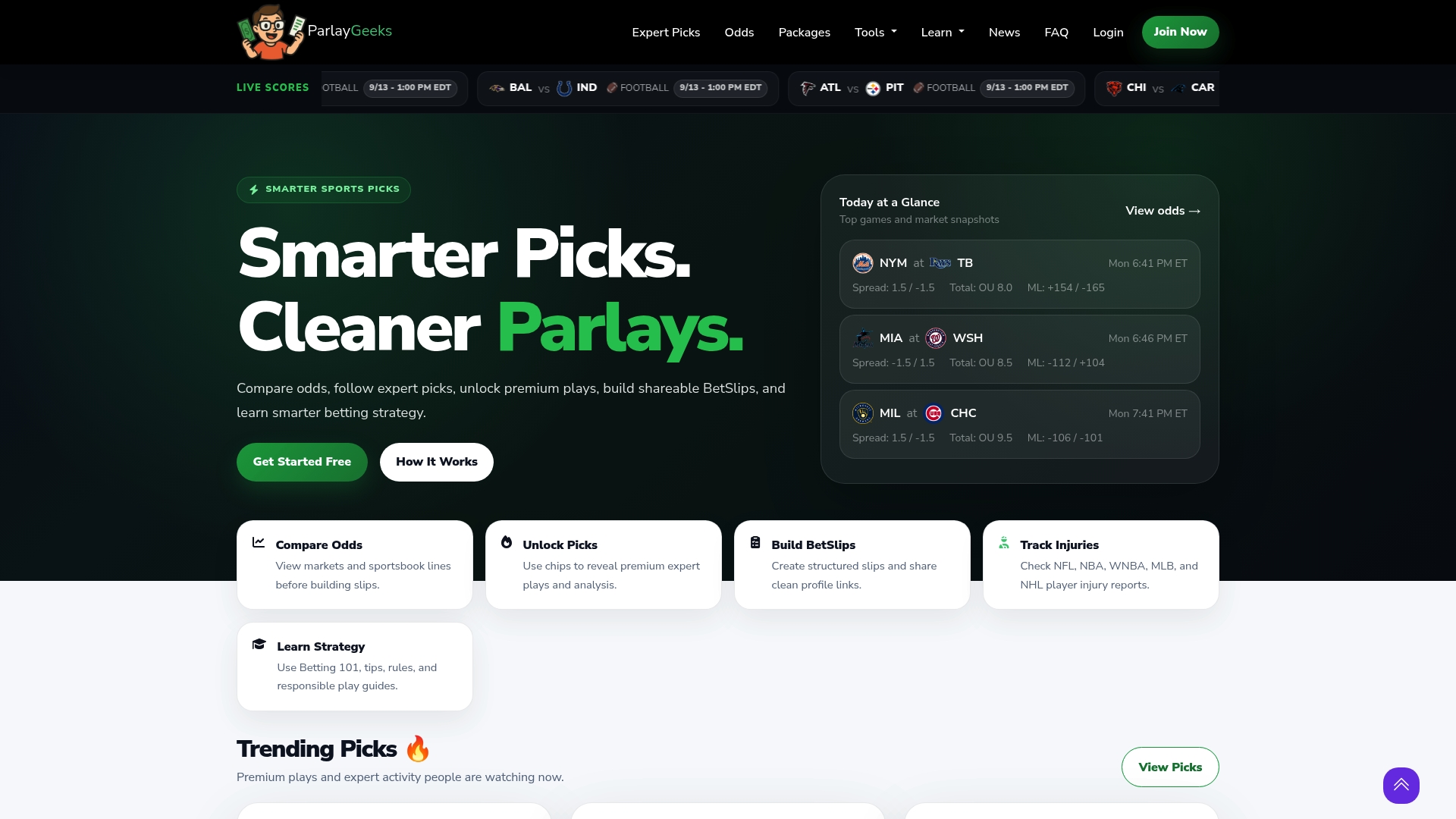
Silver is a solid entry point if you’re just building the habit of comparing lines before you bet. Gold and Platinum add deeper expert analysis for bettors who are already logging CLV and want more informed input feeding into that process. Whichever tier fits your stage, start on the ParlayGeeks premium plans page to see what each unlocks, or explore the free tools first at Parlaygeeks before deciding whether to upgrade.
Trusted Resources and Support Contacts
- Bankroll Management for Beginners: a practical breakdown of units, stop-loss rules, and budget separation.
- Bankroll Management in Sports Betting: The Complete Guide: covers staking plans and fractional Kelly in depth.
- Closing Line Value guide: explains how to calculate and interpret CLV.
- National Council on Problem Gambling: state-by-state help and crisis resources if betting stops feeling controlled.
- AGENTRIA’s responsible gambling resources: background on how operators build safeguards and signposting into betting products.
Sources
- Bankroll Management for Beginners | Budget, Units & Stop-Loss
- National Council on Problem Gambling — Help by state
FAQ
What Is the 1% Rule in Gambling?
It’s a conservative baseline that most bankroll guides recommend for bettors without a large tracked sample, since it lets you absorb a long losing streak without running out of funds.
What Is 1% of a Bankroll?
It’s your bankroll total divided by 100. That unit becomes your standard bet size until your bankroll changes enough to justify recalculating it.
How Much of My Bankroll Should I Bet per Day?
Pairing that cap with a firm stop-loss for the day keeps a bad session from turning into a bad month.
How Do I Manage a Gambling Bankroll?
Log every bet’s stake, odds, and result, since tools like ParlayGeeks’ odds comparison and shareable BetSlips make that tracking far easier to keep consistent.
What Is CLV in Betting, and Why Does It Matter?
CLV, or closing-line value, measures how your odds compare to the market’s final odds right before an event starts. It matters because it signals whether your process is sound well before win-rate does, since win-rate alone stays noisy for hundreds of bets.