

Six Step Cash Out Strategy for Parlay Bettors Rules First Checklist
Take a full cash-out when the offered amount meets your pre-set profit target or stops a loss that would breach your bankroll limit. Take a partial cash-out when you want to lock in gains but still believe the remaining legs have value. Odds comparison and BetSlip tools can make running these checks fast enough to use live, without second-guessing every offer.
TL;DR:
- Setting pre-game profit targets and stop-losses helps ensure disciplined cash-out decisions during live betting.
- Partial cash-outs are best used to lock in gains on legs that have hit or to gradually reduce exposure on large parlays.
- Using real-time odds comparison and injury updates enhances decision accuracy and prevents emotional or impulsive cash-out choices.
- The implied probability of a bet’s success can be estimated by dividing the cash-out offer by potential payout, guiding whether to hold or cash out.
- Bigger bets tend to be placed when cash-out options are available, emphasizing the importance of size management before the event begins.
Table of Contents
- Full versus partial cash-out rules for live and pre-match bets
- A quick decision checklist for live cash-out offers
- How the math behind a cash-out offer actually works
- When declining a cash-out offer is the smarter move
- Running this workflow with ParlayGeeks
- What years of watching parlays taught me about exits
- Get the tools to execute a cash-out plan faster
- Sources
- FAQ
Full versus partial cash-out rules for live and pre-match bets
A cash-out decision should never be a gut call made under a countdown timer. It should be a rule you set before kickoff, so the in-play version of you just executes it.
For full cash-out, accept the offer when either condition holds: the cash-out amount equals or exceeds your target profit percentage of the original potential payout, or declining would expose your bankroll beyond your stop-loss threshold.
Partial cash-out rules work differently. They exist to protect gains while keeping some exposure to the original bet:
- Take a moderate partial cash-out when you want light insurance but still believe in the remaining legs.
- Take a substantial partial cash-out when a leg has already hit and you are effectively playing with house money on the rest.
- On large parlays, ladder partial cash-outs: take a small percentage after the first leg lands, a larger percentage after the second, and so on, rather than deciding once.
Parlay size and correlation should tighten these thresholds. A 6-leg parlay with correlated outcomes (same game, same team) carries more concentrated risk than six unrelated legs, so the cash-out threshold should move lower and trigger earlier. Certain live signals should also override your default rule: a star player going down with an injury, a red card, a sudden and unexplained line move, or a market that goes illiquid (cash-out offers disappearing or dropping sharply) are all reasons to act immediately rather than wait for your usual number.
Pro Tip: Write your cash-out targets on the bet slip notes before the game starts. Decisions made before kickoff are consistently more disciplined than ones made mid-match.

A quick decision checklist for live cash-out offers
When a cash-out prompt appears, run this sequence instead of eyeballing the number:
- Note your original stake and the full potential payout if every leg wins.
- Read the current cash-out offer and divide it by the potential payout to get the cash-out percentage.
- Check live signals: legs remaining, time left on the clock, and any injury or scoring events since kickoff.
- Compare the cash-out percentage against your pre-set profit target or bankroll stop-loss.
- Choose your action: full cash-out if the percentage clears your target or a stop-loss is at risk, partial cash-out if you want to lock some gain while keeping upside, or decline if the offer sits well below your threshold with no adverse signals.
- Log the outcome, whether you cashed out or held, so you can review it later.
Running this in under a minute is the point. The checklist only works if it’s faster than the temptation to guess.
How the math behind a cash-out offer actually works
Every cash-out offer implies a probability. Divide the cash-out amount by the full potential payout and you get the sportsbook’s implied probability that your remaining bet wins.
Take a 3-leg parlay: stake $20, potential payout $200, two legs have already won, and the cash-out offer on the final leg is $140. A partial cash-out of $70 (half the offer) locks in guaranteed profit while leaving a $70 potential payout on the table for the last leg.

Now take a single-leg live bet where the odds have improved in your favor since kickoff, say a team is now favored after starting as an underdog. If the cash-out offer reflects the old, worse odds, holding is often better than cashing out, because the market hasn’t caught up to the shift yet.
This is exactly the dynamic researchers have flagged as a risk. Experimental participants placed bets up to 35% larger when a cash-out option was available before the event resolved, which means the mere presence of an exit option can push bettors toward bigger stakes than they would otherwise take. That’s a reason to size positions before you know a cash-out will be offered, not after.
When declining a cash-out offer is the smarter move
Cash-out decisions get distorted by the same biases that wreck bankrolls everywhere else. Sunk-cost thinking makes you hold a losing parlay because you “already have this much in it.” Loss aversion makes a guaranteed small profit feel disproportionately attractive compared to a larger, uncertain one. The gambler’s fallacy convinces you a losing streak is “due” to turn. And chasing, cashing out a win just to immediately rebet it on something riskier, undoes the discipline the cash-out was supposed to protect.
Higher impulsivity scores are associated with lower cash-out frequency, suggesting bettors who use cash-out strategically and consistently tend to be the less impulsive ones, while impulsive bettors let bets ride longer regardless of the rule.
- Pre-commit to a profit target and a stop-loss before the game starts.
- Use a fixed staking plan instead of sizing bets on emotion.
- Set deposit and time limits, or self-exclude, if cash-out decisions start feeling compulsive.
Pro Tip: If you catch yourself declining every cash-out offer “on principle,” that’s the gambler’s fallacy talking, not a strategy.
The Responsible Gaming Code of Conduct requires clear messaging and accessible help resources precisely because cash-out features can encourage this kind of drift.
Running this workflow with ParlayGeeks
Before betting, use a sports betting platform to compare odds across sportsbooks, set your target profit and stop-loss in writing, and build a shareable BetSlip that records the plan.
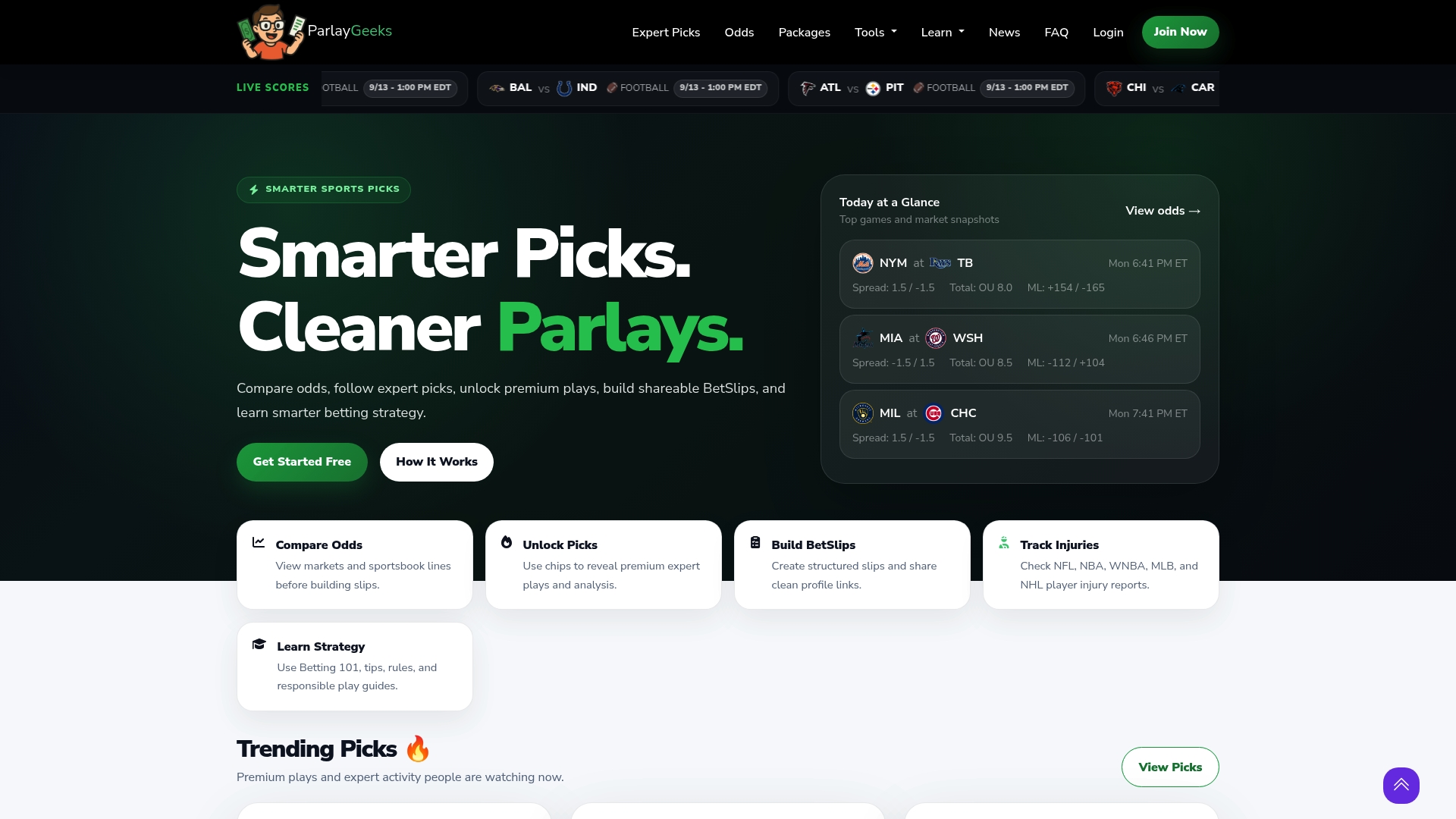
During live play, monitor odds movement and injury or line updates through your chosen platform so you’re reacting to real signals, not guesswork, when a cash-out offer lands.
- Compare real-time odds before placing the parlay, not after.
- Build a BetSlip that documents your stake, potential payout, and targets.
- Check injury and line updates before deciding on a live cash-out offer.
- Follow expert picks for context on legs you’re less confident in.
After the event, log whether you cashed out, held, or declined, and revisit your thresholds using available educational resources.
What years of watching parlays taught me about exits
I learned this after holding a 4-leg parlay through a garbage-time turnover that erased a near-certain win. Test your own threshold with small stakes and log every decision before trusting it with real money.
— Biff
Get the tools to execute a cash-out plan faster
Running the checklist above by hand works, but ParlayGeeks’ odds comparison and BetSlip tools are built to speed it up: real-time line movement, shareable BetSlips that document your targets, expert picks, and injury updates in one place.
The Silver, Gold, and Platinum plans unlock deeper expert analysis and picks so you can evaluate a live cash-out offer against informed context instead of a gut feeling, starting at $49 per month.
Sources
The Bennett et al. study and its supplemental analysis cover stake-size effects; the impulsivity study and the Responsible Gaming Code cover behavior and safeguards.
- People place larger bets when risky choices provide a postbet option to cash out (Bennett et al., 2024)
- Greater impulsivity is associated with a reduced propensity to cash out of bets (2025)
- Responsible Gaming Code of Conduct (American Gaming Association, 2026)
FAQ
What is a good cash-out percentage to target?
Your exact number should reflect your own bankroll rules and the parlay’s remaining variance.
Should I always cash out on a big parlay before the last leg?
Not always. If the implied probability behind the cash-out offer is clearly lower than your honest estimate of the last leg winning, holding has better expected value, though a partial cash-out can still lock some profit while keeping upside.
Does cash-out availability change how much people bet?
Yes. Research found bettors placed bets up to 35% larger when a cash-out option was available before the outcome was known, which is why setting a stake size before you see any cash-out offer matters.
Are cash-out winnings taxed differently than a full payout?
Tax treatment depends on your jurisdiction’s gambling tax rules and generally follows the same reporting requirements as any other betting winnings, cashed out early or not; check your local tax authority’s guidance rather than relying on a sportsbook’s summary.
How can ParlayGeeks help me apply a cash-out strategy?
A sports betting platform can let you compare real-time odds, build BetSlips that document your profit targets and stop-loss before kickoff, and check injury and line updates before deciding on a live cash-out offer. Expert picks and educational resources may also help you calibrate your own thresholds over time.