
5 Step Live Odds Tracking Workflow Bettors Use With ParlayGeeks
Live odds tracking shows you real-time price changes across sportsbooks so you can find the best number and catch meaningful line movement before it disappears. Most consumer trackers refresh every 30 to 60 seconds, with alerts flagging the moves that matter. Some platforms turn that raw price data into something you can actually act on before kickoff or mid-game.
TL;DR:
- Live odds trackers typically refresh every 30 to 60 seconds, with specialized feeds offering sub-second updates for serious bettors.
- Sharp line movements, especially those against public betting trends or caused by injury news, are more meaningful signals than small or isolated price swings.
- Setting meaningful alert thresholds, reviewing injury or weather updates, and logging bets with reasoning can help turn odds tracking into a disciplined daily routine.
- Reverse line movement, where the line moves against the majority of public bets, often indicates sharp money and warrants close attention.
- Trackers that compare odds across multiple sportsbooks and include bet logging and alerts are best suited for regular bettors aiming to analyze patterns and improve decision-making.
Table of Contents
- How Live Odds Tracking Actually Works
- Key Features to Look for in a Live Odds Tracker
- How to Turn Live Odds Tracking Into a Daily Workflow
- Reading Line Movement: Signals vs. Noise
- Where Live Odds Tracking Falls Short
- Decimal, Fractional, and American Odds: A Quick Translation Guide
- Live Odds Tracking’s Real Impact on In-Play Betting
- Comparing Live Odds Tracking Platforms
- ParlayGeeks’ Take on Live Odds Tracking
- Try ParlayGeeks for Real-Time Odds Comparison and Alerts
- Sources
- FAQ
How Live Odds Tracking Actually Works
Every live odds tracker pulls prices from sportsbook feeds, normalizes them, and pushes updates to your screen. The speed of that pipeline depends on where the tracker sits in the data chain.
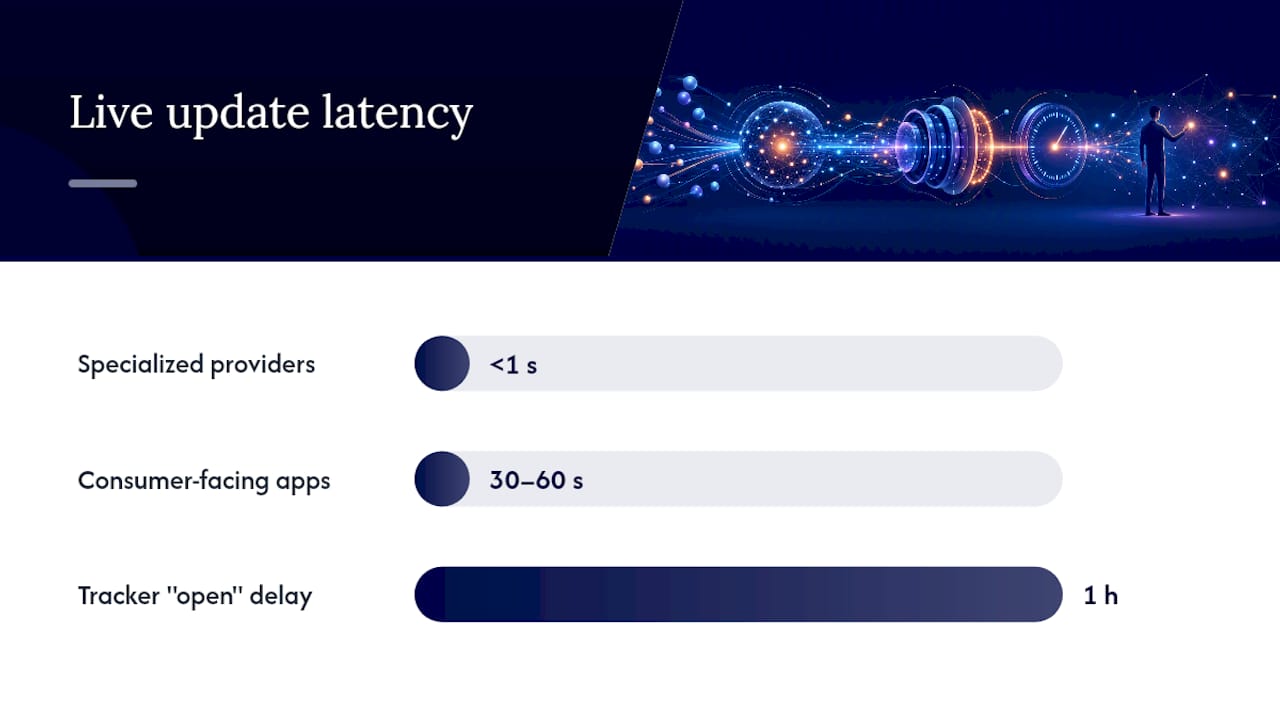
Consumer-facing apps typically refresh every 30 to 60 seconds, which is fine for spotting trends but too slow for split-second line shopping during a fast-moving quarter. Specialized data providers can deliver sub-second updates, but that speed usually comes at a price point built for serious volume bettors, not casual weekend action.
There’s also a difference between a single-book line and a consensus number. A single-book line is one sportsbook’s current price. Consensus blends multiple books into a weighted average, which smooths out noise from any one operator overreacting to a bet.
Line movement itself has a handful of usual suspects:
- Heavy one-sided public betting on a popular team
- Injury news or a late scratch
- Weather shifts affecting totals, especially outdoors
- A sportsbook rebalancing its liability after a big wager
- Sharp bettors moving money early before the public catches on
Data point: many trackers define the “open” line as the first snapshot they archived, not necessarily the very first price a book posted. That distinction matters when you’re measuring how far a line has actually moved from its baseline. If your tracker’s clock starts an hour after the market opened, you’re missing part of the move.
Key Features to Look for in a Live Odds Tracker
Not every tracker is built the same, and the differences show up fast once you’re trying to beat the clock on a line move. Before you commit to one, run it against this checklist.
- Refresh rate and latency. Ask how often prices update and whether that number holds during high-traffic windows like Sunday afternoon NFL slates.
- Sportsbook and market coverage. A tracker that only pulls three books misses a lot of the price spread you’re trying to shop.
- Alert variety. Look for threshold alerts (odds cross a specific number), movement alerts (a line shifts by X points), and news-triggered alerts tied to injuries or lineup changes.
- Bet tracking and shareable slips. Recording your bets against the line you got, with context on why you took it, turns scattered wagers into a record you can actually learn from.
- Delivery method. Push notifications work for most people; power users may want a dashboard view or an export option for spreadsheet tracking.
The alert variety is where most casual trackers fall short. A generic “line moved” ping is far less useful than one that tells you why it moved, whether that’s a reported injury or a sudden volume spike on the other side.
How to Turn Live Odds Tracking Into a Daily Workflow
Data without a process is just noise. Here’s a workflow that turns odds tracking into something you can repeat every week.
- Pick your markets and snapshot the baseline. Before lines start moving, note the opening number for the games or props you care about. This becomes your reference point for everything that follows.
- Set alerts with real thresholds. Don’t alert on every half-point tick. Set a meaningful trigger, like a 1.5-point spread move or a 20-cent price swing on a moneyline, so your phone isn’t buzzing constantly.
- Attach your bet to a tracked BetSlip. Log the stake, the line you got, and a one-line note on your reasoning. Future you will thank present you when reviewing results later.
- When a move hits, confirm before you react. Check for injury news, weather updates, or a public betting percentage that explains the shift. A move without a clear cause is a signal to watch, not necessarily to act on.
- Review after the event. Look back at which alerts actually mattered and which ones were noise. Tighten your thresholds based on what you learn.
Pro Tip: Set one alert threshold tighter than feels comfortable for a single week, then compare how many “real” signals you caught versus how many false alarms you got. That single test tells you more about calibrating your own alerts than any generic default setting ever will.
Reading Line Movement: Signals vs. Noise
Not every tick on the board deserves your attention. A half-point wobble on a low-volume prop bet is usually just noise. A number that moves a full point or more across several books, and keeps moving in the same direction, is worth a second look.
Reverse line movement is the pattern sharp bettors watch closest: the line moves against the side getting the majority of public bets. If 70% of tickets are on one team but the number moves the other way, that often signals sharp money pushing the market in the opposite direction, though a move alone still isn’t proof of anything.
A few ground rules help separate signal from static:
- Cross-check any big move against injury reports and beat-writer news before assuming it’s sharp action.
- Compare volume percentage against ticket percentage. A gap between the two often explains a move that looks confusing at first glance.
- In-play moves react faster and reverse more often than pregame numbers, so treat live-game swings with more skepticism than a steady pregame drift.
Trackers that display both the open number and the current number, with a timestamped history in between, let you judge whether a move happened suddenly or built gradually, which tells you a lot about what actually caused it.
Where Live Odds Tracking Falls Short
Odds tracking tells you what the market is doing, not what will happen on the field. A line move is a market fact, not a betting tip, and treating it as a guarantee is how bettors talk themselves into bad decisions.
Trackers also have blind spots. Some books don’t publish odds through public feeds at all, some regions have limited book availability, and delayed data during peak traffic can make a “live” number a few seconds stale, which matters more than it sounds like in a fast-moving quarter.
A few practical guardrails keep chasing lines from turning into chasing losses:
- Set a personal rule for how often you’ll re-evaluate a bet after seeing a move, rather than reacting to every alert.
- Decide your stop-loss threshold before the day starts, not in the middle of a losing stretch.
- If tracking odds starts to feel compulsive rather than useful, resources from the National Council on Problem Gambling and GambleAware offer confidential support and self-exclusion tools.
Decimal, Fractional, and American Odds: A Quick Translation Guide
American sportsbooks default to American odds, but plenty of trackers let you toggle formats, and knowing all three helps you compare value faster.
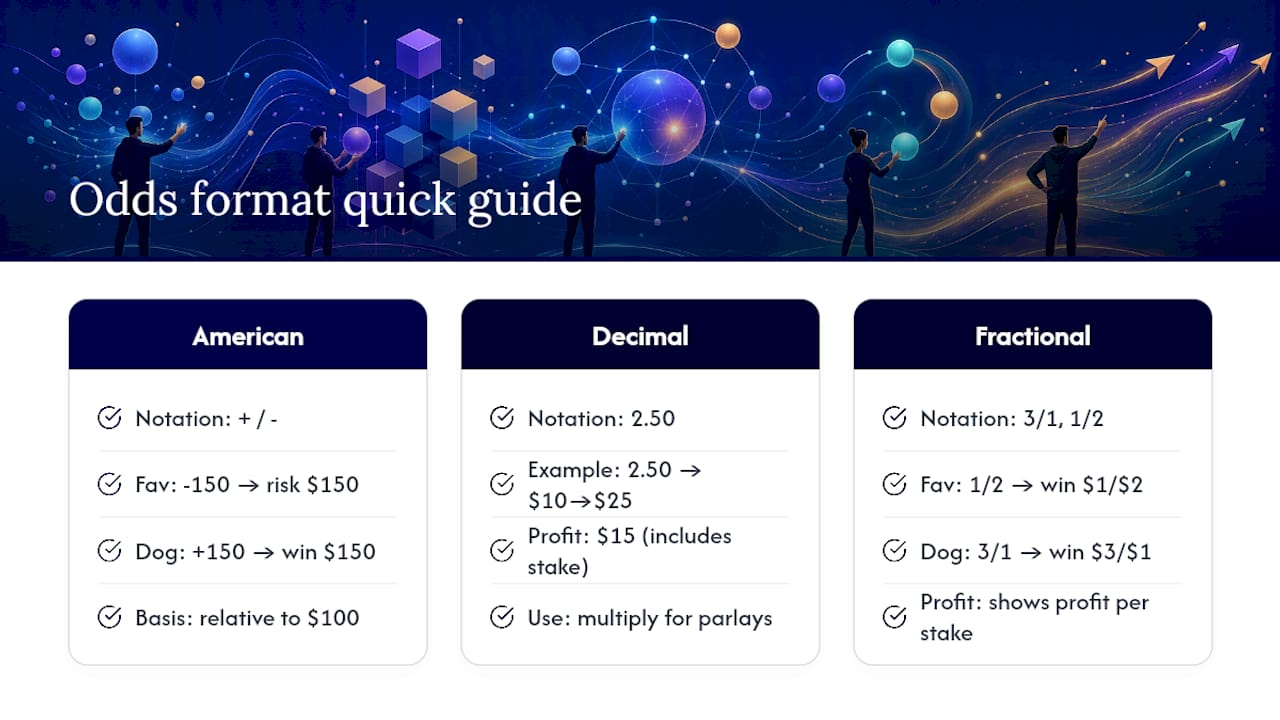
American odds use a plus or minus sign relative to a $100 stake. A moneyline of -150 means you risk $150 to win $100. A moneyline of +150 means a $100 bet wins $150. The minus number is always the favorite; the plus number is always the underdog.
Decimal odds show your total return, including your stake, for every $1 wagered. A decimal price of 2.50 means a $10 bet returns $25 total, which is $15 in profit plus your original $10. Decimal format makes multi-leg parlay math straightforward since you just multiply the numbers together.
Fractional odds, common in the UK and Ireland, show profit relative to stake as a fraction. A price of 3/1 means you win $3 for every $1 risked, plus your stake back. A price of 1/2 means you win $1 for every $2 risked.
The math behind all three converts cleanly, but American bettors comparing offshore or international markets benefit from recognizing the format shift immediately rather than doing mental math mid-bet. A tracker that lets you switch formats on the fly removes one more chance for a costly misread.
Live Odds Tracking’s Real Impact on In-Play Betting
In-play betting lives and dies by speed, and that’s exactly where odds tracking earns its keep. A line that sits still for hours pregame can swing several times in a single quarter once a star player picks up a third foul or a team loses a fumble deep in their own territory.
Bettors watching real-time updates catch overreactions the market hasn’t fully corrected yet. A number that jumps too far after one big play often snaps back once the next possession plays out normally, and a tracker with fast refresh cycles is what lets you see that gap before it closes.
The tradeoff is discipline. In-play markets move on emotion and small-sample plays just as often as they move on genuine information, so treating every live tick like sharp intelligence leads to overtrading. The bettors who do best with in-play tracking usually set a small number of pre-decided triggers, like a specific point total shift or a confirmed injury, rather than reacting to the scoreboard in real time.
Comparing Live Odds Tracking Platforms
Live odds tools generally fall into a few categories, each with real tradeoffs worth knowing before you pick one.
Free aggregator apps pull odds from several books into one feed at no cost. The upside is accessibility. The downside is usually a slower refresh rate, limited market depth, and fewer alert customization options.
Standalone line-movement boards focus purely on showing open versus current numbers and ranking games by how far they’ve shifted. These are strong for research but typically don’t offer bet tracking or slip sharing, so you’re stuck copying numbers elsewhere to keep records.
Full betting platforms with built-in tracking, like ParlayGeeks, combine real-time comparison with bet logging, alerts, and shareable slips in one place. The advantage is fewer tabs open and less manual note taking. The tradeoff, as with any freemium model, is that some deeper analysis or premium picks sit behind a paid unlock rather than being free across the board.
Which category fits depends on how seriously you track your own results. Casual bettors checking a number before kickoff might be fine with a free aggregator. Anyone logging bets weekly and trying to spot patterns in their own decisions benefits more from a platform built around tracking and alerts together.
ParlayGeeks’ Take on Live Odds Tracking
Some platforms are built around the idea that odds data only matters if it turns into a decision you can track. Pair a tight alert threshold with a logged BetSlip, and you get a record of what you saw and why you acted. Personal betting histories are typically kept private; only slips users choose to make public are visible to others.
— Elaine
Try ParlayGeeks for Real-Time Odds Comparison and Alerts
Standalone line boards show you movement. Free aggregator apps show you prices. ParlayGeeks does both, and then logs the bet you actually placed against them, so you’re not juggling three tabs to make one decision.
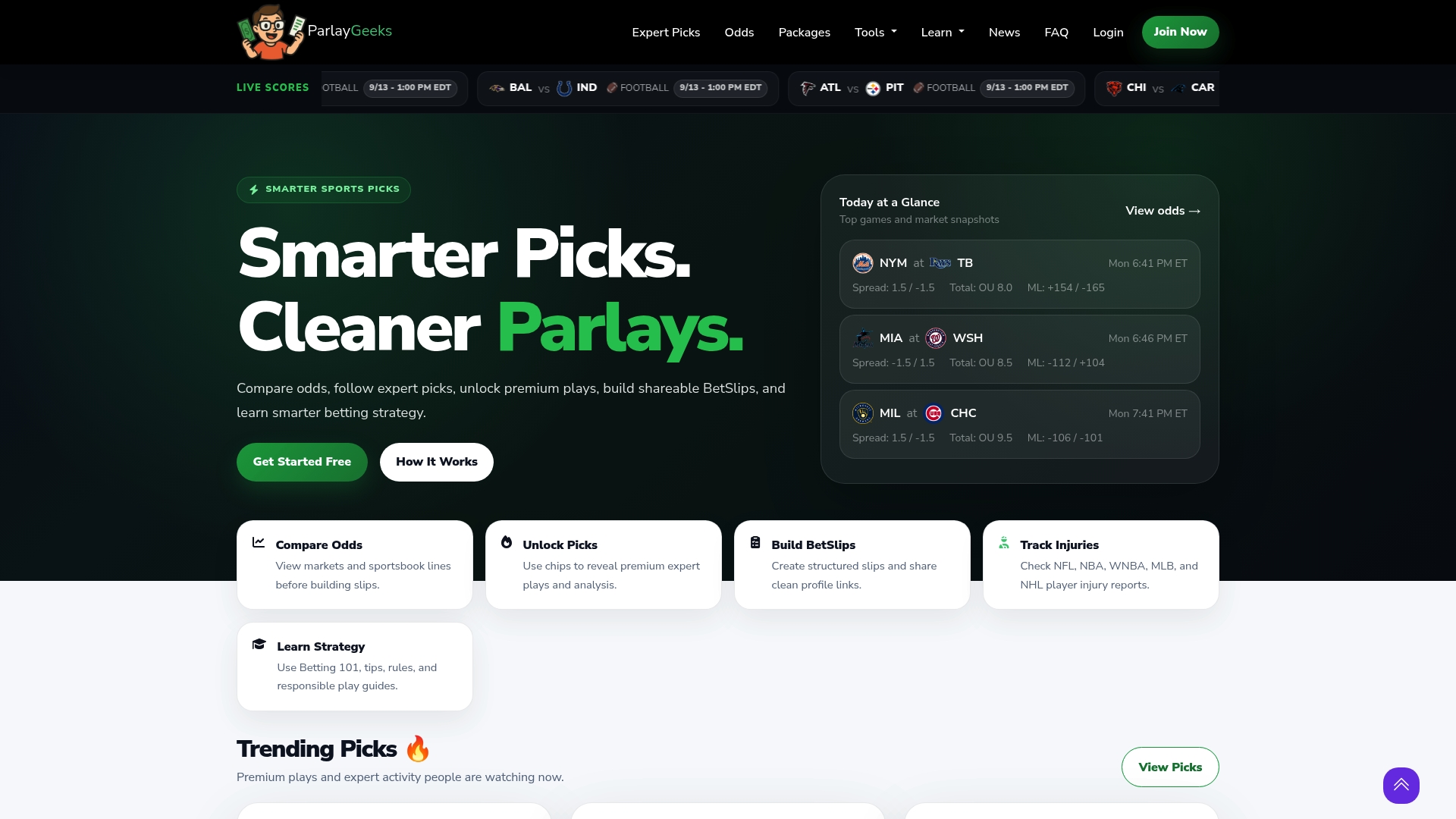
Some platforms pull real-time odds comparison across multiple sportsbooks, send alerts on price thresholds and line moves, and let users build a BetSlip that records stake and reasoning in one place. Injury updates may feed into the same dashboard, so a roster change shows up next to the price it affects. Shareable slips allow users to show their work publicly or follow bettors whose picks they trust. Core odds comparison and BetSlip tracking are often free to use, while premium expert picks and deeper analysis may require unlocking through site-specific systems. Visit the platform’s website for details on features and access. Head to ParlayGeeks to set up your first tracked BetSlip and see how the alerts fit your own betting rhythm.
Sources
- National Council on Problem Gambling
- Reverse line movement in sports betting: How to tell where the public vs. sharp money is going - The Athletic
- Line Movement Tracker: Live Sportsbook Line Moves
FAQ
What Is Live Odds Tracking?
Live odds tracking is the practice of monitoring real-time price changes across sportsbooks so you can compare current numbers, catch favorable moves, and see how a line has shifted from its opening price.
How Often Do Live Odds Update?
Most consumer apps refresh every 30 to 60 seconds, while specialized data feeds built for high-volume users can deliver sub-second updates.
What Is Reverse Line Movement?
Reverse line movement happens when a line moves against the side receiving the majority of public bets, which often points to sharp money influencing the market in the other direction.
Does ParlayGeeks Track Live Odds Across Multiple Sportsbooks?
Yes. ParlayGeeks compares real-time odds across multiple sportsbooks and pairs that data with alerts, BetSlip tracking, and injury updates in one dashboard.
Is a Line Move a Guarantee I Should Bet?
No. A line move is a market fact, not a betting recommendation, and it’s worth confirming the reason behind a move before changing your bet.