
Beat the Correlation Tax on Same Game Parlays, Stick to 2 to 4 Legs
A same game parlay stacks two or more bets from a single matchup into one ticket, and every leg has to hit for the ticket to pay. The smart play is keeping it to 2 to 4 legs, staking small, and checking the payout math before you confirm the slip. Tools like ParlayGeeks make that price check fast instead of a chore.
TL;DR:
- Limiting SGPs to 2 to 4 legs and focusing on genuinely mispriced props helps avoid excessive margin and increases the chances of a profitable pick.
- Comparing odds across multiple sportsbooks and using tools like ParlayGeeks can reveal hidden value and prevent inflated expectations from correlated legs.
- Building overly stacked or highly correlated tickets without clear an edge turns betting into a lottery and should be avoided for consistent profitability.
- SGP promotions and boosts often do not outweigh the inherent correlation tax, so understanding the math behind pricing is crucial to avoid being misled.
Table of Contents
- What Makes a Same Game Parlay Different From a Regular Parlay
- How to Build a Same Game Parlay Without Getting Burned
- Why Your Same Game Parlay Payout Is Lower Than You’d Expect
- Building a Same Game Parlay Strategy That Actually Holds Up
- Two Worked Examples Show the Payout Gap Clearly
- How ParlayGeeks Helps You Build Sharper Same Game Parlay Tickets
- How Same Game Parlays Interact With Sportsbook Promotions
- Where Same Game Parlays Are Legal and Available
- Why the Real Skill Isn’t Picking Legs, It’s Pricing Them
- Compare Your Same Game Parlay Before You Place It
- Sources
What Makes a Same Game Parlay Different From a Regular Parlay
A same game parlay (SGP) combines multiple outcomes from one specific event, and all of them have to land, just like a standard parlay. The difference is the source. A traditional parlay spreads risk across separate games happening in isolation from each other. An SGP piles everything onto one contest, which means the legs can influence each other in ways a three-team parlay across three cities never will.
Sportsbooks typically let you mix several bet types on the same slip:
- Point spreads and moneylines
- Game totals (over/under) and team totals
- Player props (passing yards, points, rebounds, strikeouts)
- Team props (first team to score, total sacks, race to a set point total)
Most books cap SGPs at a limited number of legs, though the practical ceiling for anyone betting with a real strategy is much lower. Football, basketball, baseball, and hockey all support SGPs at the major US operators, with football and basketball props drawing the heaviest volume because of how many stat lines are available per game. Some sportsbooks also offer “SGP+,” which lets you combine legs from two or more games into a single same game parlay structure. That’s a different animal, and it compounds the pricing issues covered below.
How to Build a Same Game Parlay Without Getting Burned
Building the ticket itself takes under a minute in any modern sportsbook app. Getting it right takes a little more discipline.
- Find the game and open the same game parlay or bet builder tab.
- Select your first leg, usually the one you feel strongest about.
- Add additional legs, watching how the payout recalculates after each one.
- Check for automatic exclusions. Sportsbooks block certain combinations (like a specific player prop paired with an opposing defensive stat) because the correlation is too extreme to price safely.
- Review the void and settlement rules. If one leg gets postponed or a player is scratched, know whether the whole ticket voids or just that leg.
- Set your stake and confirm.
The payout on your slip updates live as you add legs. That’s your first warning system. If adding a leg barely moves the number, the book has already priced in heavy correlation and discounted the payout accordingly.
Before you lock anything in, check the same combination at a second sportsbook. Odds on SGPs vary more between books than odds on straight bets do, because each operator runs its own correlation model. Comparing quotes across sportsbooks before placing is one of the simplest edges a bettor can create for free.
Pro Tip: Screenshot your slip before confirming. If a leg voids later and the payout looks off, you’ll have proof of the original odds and terms.
Why Your Same Game Parlay Payout Is Lower Than You’d Expect
Multiply the odds on three separate legs and you’ll usually land on a bigger number than what your sportsbook actually offers. That gap is the correlation discount, sometimes called the correlation tax, and it exists because legs from the same game are rarely independent events.
Take a quarterback throwing for over 275 yards and the game total going over 48.5 points. Those two outcomes are positively correlated: a QB piling up yardage usually means more scoring. If a book priced those legs as if they were unrelated, a sharp bettor could exploit the gap every time. So the book calculates a joint probability instead of multiplying independent odds, which shrinks the payout compared to naive math.
Here’s a simplified version of that math in action:
| Approach | Leg A odds | Leg B odds | Combined payout |
|---|---|---|---|
| Naive multiplication (treats legs as independent) | -110 | -110 | Around $190 |
| Sportsbook SGP price (accounts for positive correlation) | Same legs, correlated | Same legs, correlated | Around $140 |
That $40 difference is the book protecting its margin against a bet that’s more likely to hit than the individual odds suggest. Negatively correlated legs work the other direction, though books rarely let you combine outcomes that actively contradict each other; you’ll usually see those blocked outright.
The fastest way to spot how much hold you’re accepting is running your legs through an independent parlay or no-vig calculator and comparing that number to the book’s quote. The gap tells you exactly what you’re paying for the convenience of one slip.
Building a Same Game Parlay Strategy That Actually Holds Up
The leg count is where most bettors sabotage their own ticket. Stick to 2 to 4 legs. Every additional leg multiplies the sportsbook’s built-in margin, and SGP hold rates already run well above straight-bet hold rates before you start stacking five or six props onto one game.
A few rules worth adopting:
- Cap any single SGP at a small, fixed percentage of your weekly betting bankroll, not a flat dollar figure that ignores your bankroll size.
- Set a weekly cap on total SGP stakes so a losing streak on entertainment plays doesn’t bleed into your serious bankroll.
- Look for one prop you genuinely think is mispriced (a player total that ignores a soft matchup, for example) and build the rest of the ticket around supporting that edge rather than piling on random correlated legs for a bigger number.
- Walk away from heavily stacked, highly correlated tickets with no individual edge. That’s a lottery ticket, not a bet.
The most rational use of an SGP is a short, conviction-based ticket built around a demonstrable mispriced leg, not a five-leg fantasy stack chasing a four-figure payout on a $10 bet.
Pro Tip: If you can’t explain in one sentence why a leg is mispriced, it probably isn’t. “I like this team” is a hunch, not an edge.
Two Worked Examples Show the Payout Gap Clearly
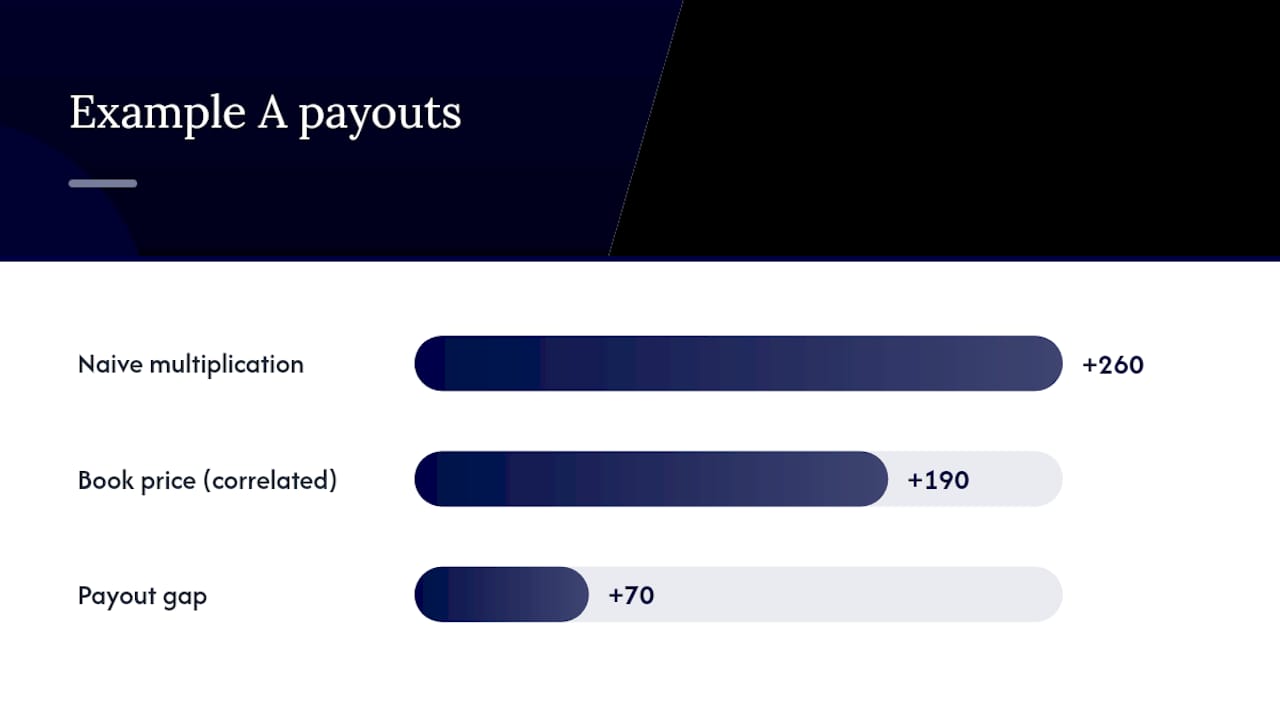
Example A: correlated legs. A quarterback over 275 passing yards (-115) paired with the game total over 48.5 (-110). Multiplying independently suggests roughly +260 on the combo. Because both outcomes tend to happen together, the book prices it closer to +190. That’s the correlation discount at work.
Example B: uncorrelated legs. First basket scored by a specific player (+450) paired with the game total over 220.5 in a basketball game (-105). These outcomes barely influence each other, so the book’s SGP price stays close to the naive multiplication, often landing within a few points of straight math.
Before placing either one, run this checklist:
- Price-shop the same combination at a second sportsbook.
- Confirm the void and conflict rules for each leg.
- Calculate the implied probability and compare it to the book’s quote.
- Cap your stake before you get emotionally attached to the number on screen.
Mistakes with SGPs cluster around three habits: treating correlated legs as independent, skipping the price comparison, and adding legs purely to inflate the payout number.
How ParlayGeeks Helps You Build Sharper Same Game Parlay Tickets
Every problem covered above (guessing at correlation, skipping price comparisons, building slips blind) has a practical fix, and it’s the reason ParlayGeeks exists as a companion tool rather than another sportsbook.
- Real-time odds comparison across multiple sportsbooks, so you catch the price gaps on SGP combinations before you commit.
- A free parlay calculator that shows the independent-leg math next to what the book is actually offering.
- Shareable BetSlips, so you can save and compare tickets instead of rebuilding them from memory.
- Expert picks and injury updates you can unlock to sanity-check a leg before adding it to a stack.
The site’s editorial lead, Roy, focuses coverage on the math behind pricing rather than hype around big payouts, which is the throughline across ParlayGeeks’ educational content.
How Same Game Parlays Interact With Sportsbook Promotions
Sportsbooks lean on SGPs heavily in their promotional calendars, and it’s worth understanding why before you chase a boost. Same game parlay insurance offers (get your stake back in bonus bets if one leg loses) and profit boosts on specific leg combinations are common because SGPs already carry a higher house edge than straight bets. A boosted payout on a same game parlay often still leaves the book ahead once you account for the correlation discount already baked into the base price.
Odds boosts targeting SGPs specifically also tend to apply to pre-built combinations the sportsbook selects, not whatever slip you construct yourself. Read the terms closely. A “profit boost” that only applies to a specific three-leg combo the book has already priced favorably for itself is a different offer than one applying to any SGP you build.
Insurance promotions (“bet a $25 SGP, get $10 back if one leg misses”) can genuinely soften variance on a short ticket, which is one of the few scenarios where stacking a slightly longer SGP makes sense: the downside is partially covered. But that math only works if you’d have made the bet anyway. Building a bigger, more correlated ticket purely to qualify for a promotion usually erases whatever value the promotion offered, because you’re accepting more correlation tax to chase a partial refund.
Deposit match and first-bet offers sometimes exclude SGPs from qualifying wagers entirely, or apply reduced odds requirements. Check the fine print before assuming a promo applies to the bet type you actually want to place.
Where Same Game Parlays Are Legal and Available
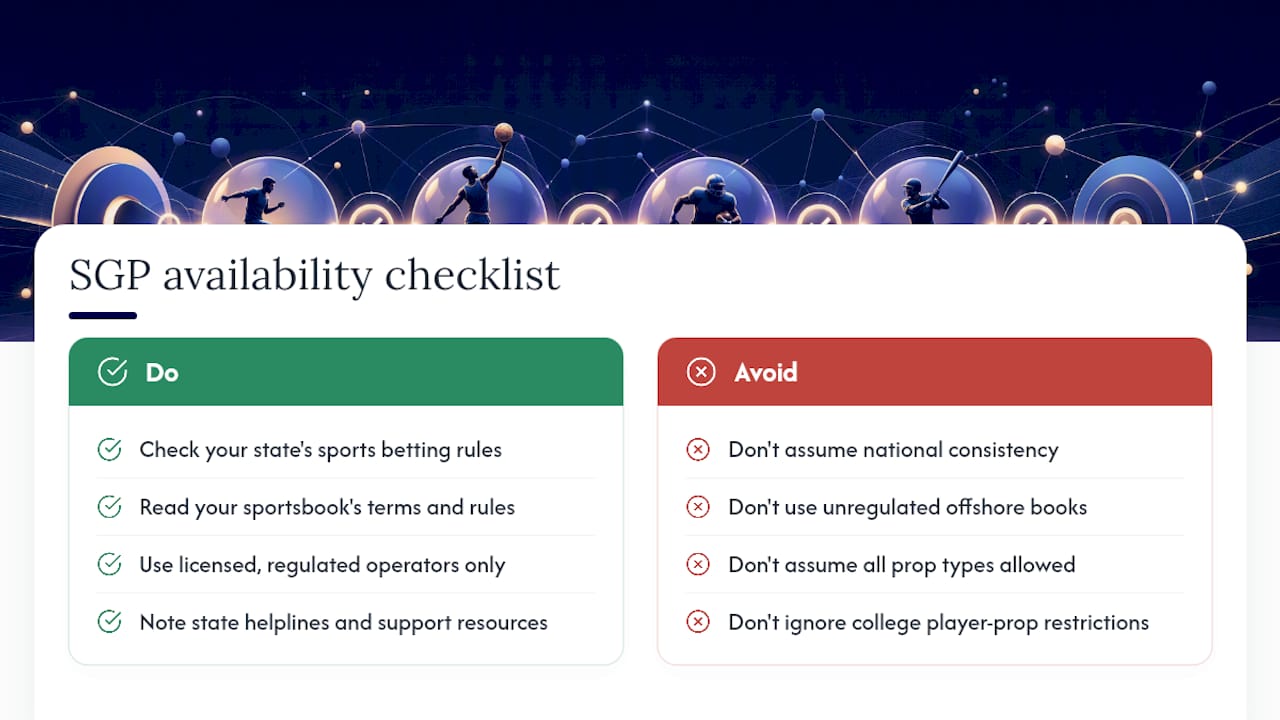
Same game parlay availability tracks directly with each US state’s sports betting regulations, since SGPs are simply a bet type offered by licensed operators rather than a separate gambling product requiring its own approval. Where a state has legalized and regulated mobile or retail sports betting, licensed sportsbooks operating there generally offer SGPs as a standard feature, subject to that state’s specific market rules.
Availability and the exact bet types included in an SGP builder can still vary by state, since some jurisdictions restrict certain prop bet categories (particularly player-specific props in college sports) even where general sports betting is legal. A handful of states with legal sports betting have historically limited or excluded college player props, which affects what you can stack into a same game parlay for those matchups even though the same game parlay format itself is available.
If you’re unsure whether a specific bet type is permitted in your state, checking your sportsbook’s own terms or your state gaming commission’s published rules is more reliable than assuming national consistency. Betting only through licensed, regulated operators in your state also matters for a reason beyond legality: it’s your only real protection if a payout dispute or void-rule disagreement comes up. Unregulated offshore books offer no such recourse.
Responsible betting resources, including state helplines and organizations like the Maryland Center of Excellence on Problem Gambling, are worth knowing about regardless of which state you’re in, particularly if same game parlays start feeling like a habit rather than an occasional play.
Why the Real Skill Isn’t Picking Legs, It’s Pricing Them
Most SGP advice online focuses on which legs to pick: fade this prop, target that matchup. That’s the least useful part of the equation. The correlation discount sportsbooks apply is the actual battlefield, and almost nobody talks about it because it’s less exciting than a hot prop tip.
Here’s what the math actually supports: a bettor who runs every SGP through an independent probability check before placing it will lose less over a season than a bettor who picks great legs but never checks the price. Conventional wisdom treats leg selection as the skill. It’s really just the entry ticket. The skill is knowing when the book’s quote is fair and when it’s padded.
Prioritize this first: stop building five and six-leg stacks for the payout number, and start asking whether the price you’re being offered reflects real joint probability or just extra margin. Two or three legs with a genuine edge on one of them will outperform a lottery ticket over any meaningful sample size.
— Fogell
Compare Your Same Game Parlay Before You Place It
There’s a real cost to guessing at correlation math in your head while a sportsbook app counts down your bet slip. ParlayGeeks gives you the numbers instead: live odds comparison across sportsbooks so you can see which one is actually offering the better SGP price, a free parlay calculator to check the independent math against the book’s quote, and shareable BetSlips if you want a second opinion before you stake anything.
The free tools cover the price-shopping and math-checking habits this guide walks through. Premium picks and injury updates are there if you want an extra layer of research on a specific leg. Keep your stakes small relative to your bankroll and treat SGPs as an occasional play unless you’ve found a real edge. Start comparing odds and building your slip at ParlayGeeks before your next same game parlay.