

Verify Before You Bet: U.S. Sports Betting Laws 2026, Check State Menus

Sports betting is legal in some form in dozens of states plus Washington, D.C., with many of those offering full mobile and online wagering. Since the Supreme Court struck down the federal ban in 2018, every state sets its own rules, so the only way to know what’s legal for your specific bet is to check your state gaming regulator’s website directly.
TL;DR:
- Most states with active sports betting markets allow mobile and online wagering, but restrictions still apply in tribal-only or retail-only jurisdictions.
- Bettors should verify their state’s approved wager categories and authorized markets directly from official regulator sources to avoid voided bets or legal issues.
- Federal law no longer bans sports betting but imposes a 24% tax withholding for large winnings and requires reporting all income on tax returns.
- The main pitfalls include confusing state age restrictions, betting on in-state college teams, and attempting to wager outside the approved markets listed in official regulatory documents.
- Geolocation verification and regulator-approved wagering menus are critical tools to confirm your bets are legal before placing high-stakes or unusual wagers.
Table of Contents
- Which States Allow Sports Betting Right Now?
- How Did We Get a State-by-State Patchwork Instead of One Federal Law?
- What Rules Trip Up Bettors Most Often?
- Who Actually Enforces These Rules?
- What Do You Owe the IRS on Sports Betting Winnings?
- What Consumer Protections Are Operators Required to Offer?
- How Do You Confirm a Specific Bet Is Legal Before You Place It?
- Why Verification Has to Come Before Convenience
- Track Odds and Market Changes With ParlayGeeks
- Primary Sources for Verifying Your State’s Sports Betting Rules
- Sources
- FAQ
Which States Allow Sports Betting Right Now?
The map looks nothing like it did a decade ago, but it’s still far from uniform. Some states run wide-open online markets with a dozen competing apps. Others restrict betting to physical casino floors or tribal land, and a handful still ban it outright.
Here’s how to read the categories before scanning your state:
- Online and retail: Mobile apps and in-person betting windows are both legal statewide.
- Retail only: You can bet at a licensed casino, racetrack, or tribal venue, but there’s no statewide mobile app.
- Tribal-only mobile: Online betting exists, but only through apps operated under tribal gaming compacts, sometimes limited to tribal land or specific counties.
- Legal but not launched: The legislature approved it, but no operator has gone live yet.
- Prohibited: No legal sports betting market exists, full stop.
Most of the biggest population centers, New York, New Jersey, Pennsylvania, Illinois, Ohio, and Michigan, fall into the online-and-retail bucket and have for a few years now. That’s where the market is most mature, with five or more competing sportsbooks and aggressive promotional offers.
A smaller group runs retail-only markets. Mississippi and Wisconsin, for example, let you bet inside a casino but haven’t authorized statewide mobile wagering the way neighboring states have. If you’ve ever wondered why your betting app works fine in one state and disappears the moment you cross a border, this is usually the reason.
Tribal-only mobile markets are the trickiest to explain, and they trip up more bettors than any other category. California doesn’t have legal statewide sports betting at all after voters rejected multiple ballot measures. But drive to a tribal casino in a state like Florida, where the Seminole Tribe operates the Hard Rock Bet app under a compact with the state, and mobile wagering is legal anywhere within Florida’s borders because the compact grants that reach. The technical mechanism matters here: geolocation and server routing under a tribal compact can behave completely differently from a state-licensed commercial app, even when both look identical on your phone screen.
Then there’s the holdout column. Utah and Hawaii ban all forms of commercial gambling, including sports betting, for cultural and constitutional reasons that predate the 2018 Supreme Court ruling. California, Texas, and a few others have active legislative pushes but haven’t crossed the finish line. This is often because commercial operators, tribal gaming interests, and horse racing tracks can’t agree on licensing terms. Missouri only recently flipped from prohibited to legal-but-launching after voters approved it, which shows how quickly a state’s status can change even within a single year.
A few states deserve a special callout because their rules shift depending on who you ask:
- Texas: No legal sports betting yet, despite repeated legislative attempts and heavy lobbying from major operators.
- Minnesota: Ongoing negotiations between tribal nations and the legislature have stalled repeated mobile-betting bills.
- Georgia: Legislative proposals keep failing by narrow margins, largely over how tax revenue would be split.
- North Carolina: Went from zero to a competitive online market in under two years, one of the fastest launches on record.
If your state isn’t in one of these obvious buckets, the fastest path to certainty is your state’s gaming or racing commission website, not a betting forum or an operator’s marketing page. Regulators publish licensing lists and authorized wager menus that update far more often than most third-party guides do.
How Did We Get a State-by-State Patchwork Instead of One Federal Law?
For 26 years, the Professional and Amateur Sports Protection Act (PASPA) banned states from authorizing sports betting, with a narrow grandfather clause for Nevada. New Jersey challenged that law, arguing it violated the Tenth Amendment by commandeering state governments to enforce a federal gambling policy. In 2018, the Supreme Court agreed in Murphy v. NCAA, striking PASPA down entirely and handing regulatory authority back to the states, a shift the Congressional Research Service has tracked closely as states rushed to fill the vacuum.
That’s the single fact that explains everything else in this article. There is no federal sports betting law anymore, only fifty separate state experiments plus tribal compacts layered on top. The Legal Information Institute’s overview of gambling law frames it well: gambling regulation in the U.S. has always defaulted to the states except where Congress specifically intervenes, and Murphy simply removed one of the last major federal interventions in this space.
Federal law still touches the industry in narrower ways. A federal excise tax applies to legal sports wagers, separate from any state tax on operator revenue, and it’s collected regardless of which state you’re in. Congress has also introduced bills targeting sportsbook advertising volume, restrictions on using college athlete NIL deals in promotional betting content, and grant funding for state problem-gambling programs. None of these proposals have become law as of 2026, but they show where federal attention is drifting: not toward re-banning betting, but toward regulating how aggressively it gets marketed.
What Rules Trip Up Bettors Most Often?
The legal status of your state is only step one. Most costly mistakes happen inside states where betting is fully legal, because bettors assume the rules are the same everywhere. They aren’t.
Minimum age is the simplest variable and the easiest to get wrong. Most states set the threshold at 21, but Montana and a few others allow betting at 18 for certain wager types. Confirm the age floor for your specific state and platform before you ever fund an account.
In-state college team restrictions catch a surprising number of bettors off guard. Several states, including New Jersey and Pennsylvania at various points in their regulatory history, have barred betting on games involving in-state colleges or on college events hosted within state lines. The logic is political as much as practical: lawmakers worry about the optics of fans betting on their own state university’s players.
Certain wager types get banned or restricted regardless of state, especially around:
- Individual college athlete performance props (points, rebounds, strikeouts by a specific college player)
- Any market touching high-school sports, which is prohibited essentially everywhere
- Novelty markets tied to injuries, ejections, or other outcomes regulators consider too easy to manipulate
- Certain in-play “micro” markets that some states haven’t formally authorized yet
That last category connects to a concept every serious bettor should understand: the authorized wagering menu. States don’t let sportsbooks offer whatever markets they want. Regulators publish a specific list of approved bet categories, and operators can only take action on what’s on that list. Nebraska’s authorized sports wagering menu is a good public example: it spells out exactly which sports, leagues, and prop types are approved, and anything outside that list is off limits no matter how many other states allow it.
This is also why sportsbooks sometimes void or cancel a bet you already placed. If an operator accepts a wager on a market that later turns out to fall outside the state’s authorized menu, whether from a technical error or a compliance oversight, the regulator can force the book to void it and refund the stake. It’s rare, but it happens most often around obscure props during high-profile events like the Super Bowl.
Pro Tip: Before betting a niche or unusual prop, especially a college-related one, search “[your state] authorized sports wagering menu” and check the actual PDF regulators publish. It takes two minutes and saves you from a voided bet later.
Who Actually Enforces These Rules?
Every state with legal sports betting has a gaming commission, racing commission, or lottery division responsible for licensing operators, approving authorized wager menus, and disciplining sportsbooks that break the rules. These agencies aren’t passive rule books. Nebraska’s Racing and Gaming Commission, for instance, actively updates its wagering menu and can fine or suspend operators that accept bets outside approved categories.
Tribal compacts complicate the enforcement picture in states with significant tribal gaming presence. A compact is a negotiated agreement between a tribal nation and the state government that spells out what kind of gambling the tribe can offer, where, and under what technical constraints. This is why some mobile apps only function on or near tribal land while others work statewide even though they look identical on the surface. The compact, not the app’s marketing, determines the actual legal footprint, and that distinction has real consequences if you’re betting from a location the compact doesn’t cover.
Courts are also actively reshaping this space, not just legislatures. In 2026, the Ninth Circuit ruled in favor of Nevada in a case testing whether prediction market platforms offering sports-event contracts had to comply with state gaming licensure. The court sided with the state, affirming that Nevada’s gaming laws apply to these contracts just as they would to a traditional sportsbook, according to the Nevada Gaming Control Board’s press release on the ruling. That decision matters well beyond Nevada. It signals that federal courts are willing to treat these newer contract-trading platforms as functionally equivalent to sports betting, which means their availability in your state can shift based on litigation outcomes just as easily as it can from a new state law.
What Do You Owe the IRS on Sports Betting Winnings?
Every dollar you win betting on sports is taxable income, and you owe it whether or not the sportsbook sends you a tax form. That’s the part most casual bettors miss: the paperwork threshold and the tax obligation are two separate things.
Payers are required to issue Form W-2G and withhold 24% for federal tax when your winnings minus your wager exceed $5,000 and the payout is at least 300 times the amount you bet, according to the IRS instructions for Forms W-2G and 5754. That 300-to-1 ratio is the part people overlook. A $50 bet that returns $16,000 hits both thresholds and triggers automatic withholding. A $2,000 bet that returns $16,000 does not, because the payout ratio falls well under 300 times the stake, even though the dollar amount looks similar.
Backup withholding can also apply at that same 24% rate in specific situations, most commonly when you fail to provide a correct taxpayer identification number to the payer.
Here’s what that means for your actual tax filing:
- Report all gambling winnings on Form 1040, regardless of whether you received a W-2G.
- Deduct gambling losses only if you itemize deductions on Schedule A, and only up to the amount of winnings you reported, according to IRS Topic No. 419.
- Keep a running log of dates, amounts wagered, amounts won or lost, and the sportsbook or venue for every session.
- Save betting slips, account statements, and any W-2G forms you receive for at least three years.
The 300 to 1 payout ratio, not just the dollar amount, decides whether your sportsbook is required to withhold taxes automatically. Miss that detail and you might assume a big win is tax-free just because no form showed up in your inbox.
What Consumer Protections Are Operators Required to Offer?
Licensed sportsbooks don’t just take your bets. State regulators require them to build in specific safeguards, and the details vary by state in ways that matter if you or someone you know is struggling with gambling.
Standard requirements across most legal states include age and identity verification before an account can fund a first wager, self-exclusion programs that let a bettor voluntarily ban themselves from all licensed operators statewide, mandatory deposit and wager limit tools, and restrictions on advertising aimed at self-excluded individuals or anyone flagged for problem-gambling risk.

Massachusetts offers a strong example of how far these mandates can go. The Massachusetts Gaming Commission requires operators to consult with the state’s Department of Public Health when designing their responsible-gambling plans, rather than letting sportsbooks write their own policies in isolation. That’s a meaningfully different approach from states that only require a hotline number printed somewhere in the app.
Some operators now work with third-party providers on this front. AGENTRIA’s responsible-gambling automation tools are one example of how sportsbooks are beginning to automate risk detection and self-exclusion enforcement across their platforms rather than relying purely on manual compliance checks.
For your own protection as a bettor:
- Set a deposit limit before you start betting, not after a losing streak.
- Use self-exclusion tools if betting starts affecting your finances, sleep, or relationships.
- Stick to operators licensed in your state; unlicensed offshore sites carry no consumer protections at all.
Pro Tip: If you ever feel like you’re chasing losses instead of making decisions you’d stand behind sober, call 1-800-GAMBLER. It’s free, confidential, and available in every state with legal betting.
How Do You Confirm a Specific Bet Is Legal Before You Place It?
Run through this sequence any time you’re unsure, especially for a novel prop, a new app, or a bet placed while traveling.
- Confirm your physical location. Most states require you to be physically within state lines to place a mobile wager, regardless of where your account was opened or where you live.
- Check your state regulator’s licensing lookup and authorized wagering menu. Every legal state publishes a list of licensed operators and, usually, the specific markets they’re approved to offer.
- Determine whether the app is state-licensed or tribal-only. If it’s tribal, confirm the compact covers your current location; some only work on or near tribal land even though the app downloads statewide.
- Verify your geolocation settings are active and accurate. Sportsbook apps use GPS and Wi-Fi triangulation to confirm you’re in a legal betting zone, and a VPN or spoofed location will typically get your account flagged or frozen.
- When the answer still isn’t clear, contact the regulator directly or consult a licensed attorney, particularly for high-value bets, novel market types, or any situation involving prediction-market platforms currently working through litigation.
That fifth step matters more than it sounds. Regulators would rather answer a five-minute email than deal with a dispute after the fact, and most licensing divisions list a direct enforcement contact on their website.
Why Verification Has to Come Before Convenience
The sports betting industry loves to talk about growth numbers, and the growth is real. But every new state that legalizes betting also adds another layer of rules that looks similar to its neighbors without being identical, and that gap is where bettors get burned, not through bad luck, but through bad assumptions about what’s actually allowed.
The instinct to trust whatever an app offers you is understandable. It’s also the wrong instinct. Authorized wagering menus exist precisely because states don’t fully trust operators to self-regulate what markets they push, and the Ninth Circuit’s ruling on prediction markets shows regulators are willing to fight in court to keep that authority. If a court decision can reshape platform legality overnight, a bettor’s five-minute habit of checking the regulator’s site before a big or unusual wager isn’t excessive caution. It’s the baseline.
Where ParlayGeeks fits into that picture is narrow and deliberate: helping bettors track odds and market movement across licensed books, not replacing the legal homework state regulators require. Treat the two as separate jobs. Let the regulator confirm what’s legal. Let a tool built for comparison handle the part where humans are genuinely bad at manual tracking, watching a dozen sportsbooks’ lines shift in real time.
— Big C
Track Odds and Market Changes With ParlayGeeks
ParlayGeeks is the alternative to bouncing between a dozen sportsbook tabs just to find out who’s offering the best number on tonight’s slate. Comparing real-time odds across multiple licensed sportsbooks in one place means you catch line movement and value plays the moment they show up, instead of after the market’s already corrected.
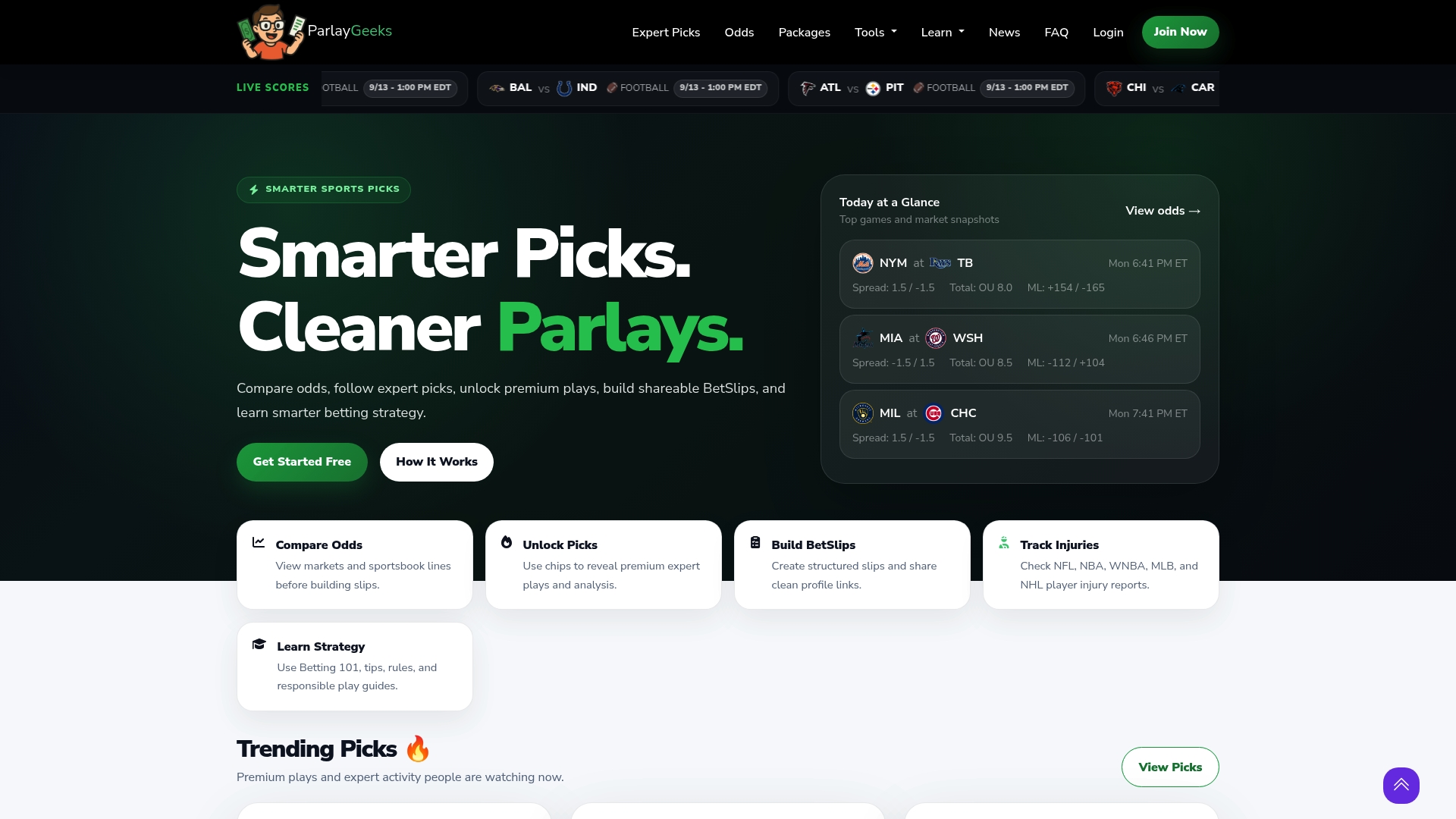
The platform also gives you a place to build and share BetSlips, follow expert bettors whose picks come with actual reasoning attached, and pull injury updates without hopping between five different news sites. None of that replaces checking your state regulator’s authorized wagering menu or confirming an app’s legal status where you’re standing. ParlayGeeks is a research and comparison tool, not a legal opinion, and it won’t tell you whether a specific prop is authorized in your state.
What it will do is make the parts of betting research that have nothing to do with legality faster and clearer. If you want expert analysis alongside your odds comparison, the Silver, Gold, and Platinum plans unlock deeper picks and insights starting at $49 a month. Head to ParlayGeeks to see the free tools first and decide from there.
Primary Sources for Verifying Your State’s Sports Betting Rules
Don’t take secondhand summaries, including this one, as the final word on your state’s specific rules. These are the primary sources worth bookmarking:
- IRS Instructions for Forms W-2G and 5754 for exact federal withholding and reporting rules
- IRS Topic No. 419: Gambling Income and Losses for how to report winnings and deduct losses
- Congressional Research Service brief on sports gambling and consumer finance for federal legal background
- Nevada Gaming Control Board’s Ninth Circuit press release on the prediction-markets ruling
- Nebraska’s authorized sports wagering menu as a model of how states define legal markets
- Legal Information Institute’s Wex entry on gambling law for general legal framing
This article is general information, not a substitute for advice from a qualified lawyer. Consult a qualified legal professional about your own circumstances before acting on anything here.
Sources
- Instructions for Forms W-2G and 5754 (01/2026) | Internal Revenue Service
- Ninth Circuit rules in favor of Nevada (press release) | Nevada Gaming Control Board
- Congress
- Nebraska Authorized Sports Wagering Menu (2026) | Nebraska Racing and Gaming Commission
- Mass
FAQ
In Which States Is Sports Betting Still Illegal?
Sports betting remains fully prohibited in Utah and Hawaii, and it’s not yet legal in states like Texas, California, and Georgia despite ongoing legislative efforts. Status changes fast, sometimes within a single legislative session, so check your state gaming regulator’s site for the current picture rather than relying on last year’s list.
What Happens If You Win Over $100,000 on a Sportsbook?
The sportsbook reports the win to the IRS on Form W-2G and withholds 24% for federal tax when your winnings minus your wager top $5,000 and the payout is at least 300 times your stake, per IRS withholding rules. You still owe tax on the full amount regardless of the withholding, and you report it on your Form 1040 when you file.
Is It Legal to Bet on Sports Anywhere in the US?
Sports betting is legal in some form in dozens of states plus Washington, D.C., but legality depends entirely on which state you’re physically in when you place the bet, not where you live or where your account was opened. States like Utah, Hawaii, and several others still prohibit it outright, so there’s no single national answer that applies everywhere.
Can You Use a VPN to Bet on Sports From a Restricted State?
No. Every licensed sportsbook uses geolocation technology to verify you’re physically located in a state where betting is legal, and using a VPN to fake that location violates the operator’s terms and the regulator’s rules. Accounts caught doing this typically get frozen, and any winnings can be forfeited entirely.
Does ParlayGeeks Tell Me If Betting Is Legal in My State?
No. ParlayGeeks compares odds across licensed sportsbooks and offers expert picks and educational tools, but it isn’t a legal service and doesn’t verify state-by-state legality. For that, check your state’s gaming regulator directly or consult a licensed attorney for complex situations.