

Tailing Picks: What to Verify in the First 5–15 Minutes
Tailing picks can work, but only when you treat each pick as a lead to verify rather than a command to follow. Before you wager, run three quick checks: read the reasoning behind the pick, compare the current line against the published one, and size your stake by a bankroll rule you set in advance. A step-by-step checklist and concrete bankroll rules follow below.
TL;DR:
- Vet sources by checking timestamped picks, reasoning, sample size, and stake reporting; missing records mean the source is unproven, so use small stakes or pass.
- Even small price improvements compound; skip a pick if the line has moved sharply against it or its reasoning cannot be verified.
- Set a monthly entertainment budget, fixed unit size, daily and weekly loss limits, and a session time limit; stop rather than chase losses.
- Record each wager and closing line, then review outcomes weekly; beating the close can indicate good pricing, but it does not guarantee profit.
Table of Contents
- How tailing picks works and why speed matters
- How do you evaluate a pick source before you follow it?
- What bankroll rules keep tailing from getting out of hand?
- Which steps should you run after a pick appears?
- What red flags tell you to pause or skip a pick?
- Why I treat picks as research leads
- How we help you tail picks with more discipline
- FAQ
- Sources
How tailing picks works and why speed matters
A pick is a recommendation published at a specific moment, at a specific price. That timestamp matters more than most bettors realize. If a source posts a side at one price and you place the bet later at a worse price, you are no longer tailing the same bet. You are paying a higher price for the same opinion, and the edge the source saw may be gone.
Lines move because bettors and bookmakers react to new information, including injuries, weather, and large wagers from sharp players. Research on real-time betting line movement finds that sportsbook forecasts can be inefficient, which is exactly why early prices sometimes hold value and why that value fades as the market adjusts. If you want a closer look at how these shifts play out, our breakdown of NBA line movement patterns shows the signals worth watching.
Two basics protect you here. First, line shopping: the same pick can be priced differently across sportsbooks, and a few cents of difference compounds over a season. Second, vig, also called juice, which is the sportsbook’s built-in margin. At standard pricing, you need to win enough bets to cover the sportsbook’s margin just to break even. If odds formats still feel slippery, our guide to reading betting odds covers the three formats you will see.

How do you evaluate a pick source before you follow it?
Not every source deserves your money. Before you tail anyone, hold them to a short list of standards:
- Transparency of reasoning. Do they explain why a side has value, or just post a team name? A bettor whose approach you understand is worth more than a short hot streak.
- Sample size. A record built on a few dozen picks tells you very little. Variance in sports betting is brutal, and small samples flatter almost everyone.
- Units and stake reporting. Does the source report how much was risked on each pick? A strong win record means little if losses were staked at much more than wins.
- Timestamps. Picks posted before the game, with a visible time, are verifiable. Picks edited or added after the fact are not.
- Timeliness. A pick published an hour before kickoff leaves you little room to shop lines or double-check anything.
Each item guards against a specific failure. Transparency lets you cross-check logic, sample size reduces the odds you are following luck, and stake reporting keeps a record honest about profit rather than just wins.
A quick vetting routine can help you assess a source. Scroll back through the source’s history, confirm picks carry timestamps, check that units are published, and count how many picks the record actually covers. If any of those are missing, treat the source as unproven and tail with small stakes or not at all.
What bankroll rules keep tailing from getting out of hand?
Tailing multiplies your exposure, because every source you follow adds bets you did not pick yourself. That makes pre-commitment essential. The Responsible Gambling Council advises setting time and spending budgets before you play, using loss and win limits, and never gambling to replace income.
Here is a simple structure:
- Set a monthly betting budget from money you can afford to lose, and treat it as entertainment spending.
- Define a unit as a small, fixed share of that bankroll, and stake every tailed pick as a fixed number of units.
- Decide your daily and weekly loss limits before the first bet, and stop when you hit them.
- Set a session time limit so a bad night does not stretch into a worse morning.
- Never chase losses. The National Council on Problem Gambling names chasing as a primary indicator of gambling harm.
- Log every tailed bet, then review results weekly and pause any source that underperforms over a meaningful stretch.
Pro Tip: Write your limits down before you open a sportsbook app. A rule you set while calm is far easier to follow than one you invent after a losing streak.
For a deeper walkthrough of unit sizing, our bankroll management guide lays out budgeting rules for beginners.
Which steps should you run after a pick appears?
When a pick lands, speed and discipline both count. Work through this order:
- Read the reasoning and check the timestamp. Confirm the pick was posted before the line moved and that the logic holds up when you read it skeptically.
- Check the current line. Compare today’s number against the published one. If the price has moved sharply against you, the value may already be gone.
- Shop the best price. Open several sportsbooks and take the best available number. Even small improvements add up across many bets.
- Apply your stake rule. Bet your pre-set number of units and nothing more, no matter how confident the source sounds.
- Record the bet and the closing line. Note the price you took and compare it to the closing price later. Beating the close, known as closing line value, is a useful sign you are getting good numbers.
- Set a review date. Decide now when you will evaluate this source’s results, and log each outcome so your judgment rests on data rather than memory.
If any step fails, such as a vanished line or missing reasoning, skip the bet. Passing costs you nothing, and there will be another pick tomorrow.
What red flags tell you to pause or skip a pick?
Some warning signs are worth acting on immediately. Heavy line movement before the pick was even published suggests the value was already taken. Vague or missing reasoning means you cannot verify anything. Inconsistent stake reporting, or a record that covers only a handful of picks, means you are guessing about quality.
The response should be measured, not dramatic. Skip the bet, reduce your stake, or wait for the next pick and see whether the source improves. Do not respond to a skipped pick or a loss by betting bigger elsewhere. That is chasing in disguise, and the same limits apply.

Why I treat picks as research leads
Here is my honest stance: a pick is the start of your homework, not the end of it. The bettors who last are the ones who read the reasoning, compare lines, and keep records, even when it feels slower than just clicking. Edge in this game is thin, and sloppy execution erases it. That is why odds comparison, pick tracking, and shareable BetSlips matter to me: they keep the process honest. Keep every wager inside your bankroll rules.
— Thelma
How we help you tail picks with more discipline
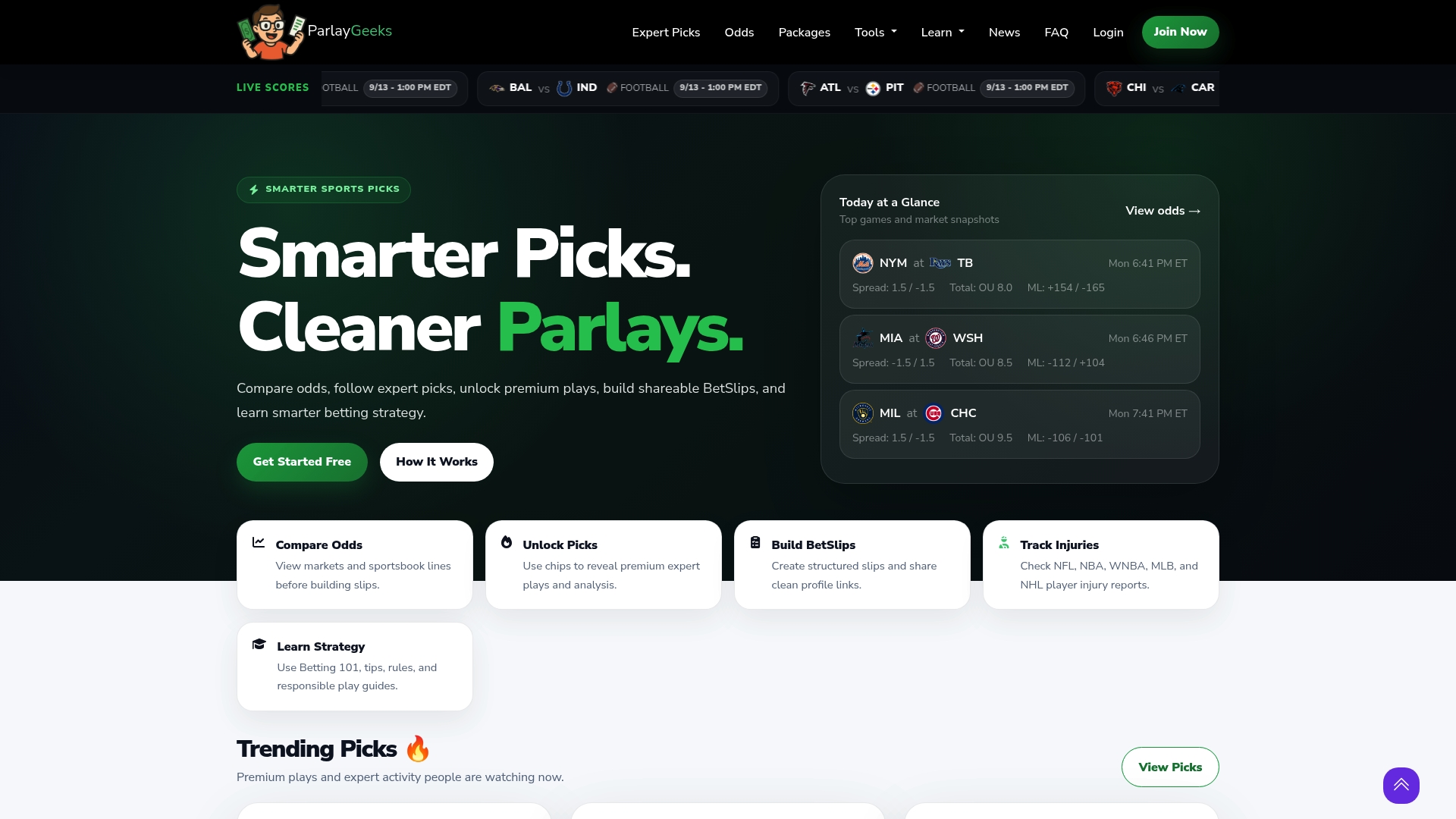
We built ParlayGeeks to help you complete the verification steps above. Here is what we offer:
- Real-time odds comparison across multiple sportsbooks
- Expert picks with the reasoning behind them
- Shareable BetSlips to log and review your wagers
- Free tools plus premium plans: Silver at 49 $ per month, Gold at 99 $ per month, and Platinum at 199 $ per month
Compare the options on our premium plans page, and nothing here guarantees outcomes.
FAQ
Can ChatGPT predict bets?
No tool can reliably predict sports outcomes. An AI chatbot can summarize stats or explain a bet type, but it does not see live lines or injuries. Treat anything it says as a starting point to verify, never as a pick.
What is the best strategy to win a bet?
There is no guaranteed winning strategy. Research shows betting markets have inefficiencies that systematic, data-driven approaches can exploit, so favor line shopping, careful sourcing, and disciplined staking over gut feelings.
What are gambling tips that keep betting safe?
Set a budget before you play, treat betting as entertainment rather than income, track your bets, and take breaks. The North Carolina responsible gambling guide also recommends educating yourself on odds and using self-exclusion tools if needed.
What is the most profitable way to bet on sports?
No method is reliably profitable for everyone, and most bettors lose over time. The approaches with the best case combine price awareness, such as line shopping and beating the closing line, with small, consistent stakes and honest record keeping.
Sources
- National Council on Problem Gambling Reminds Super Bowl Viewers ‘If You Bet, Know Your Limits’ & Offers Resources for Those Seeking Help - National Council on Problem Gambling
- Inefficient Forecasts at the Sportsbook: An Analysis of Real-Time Betting Line Movement | Management Science